
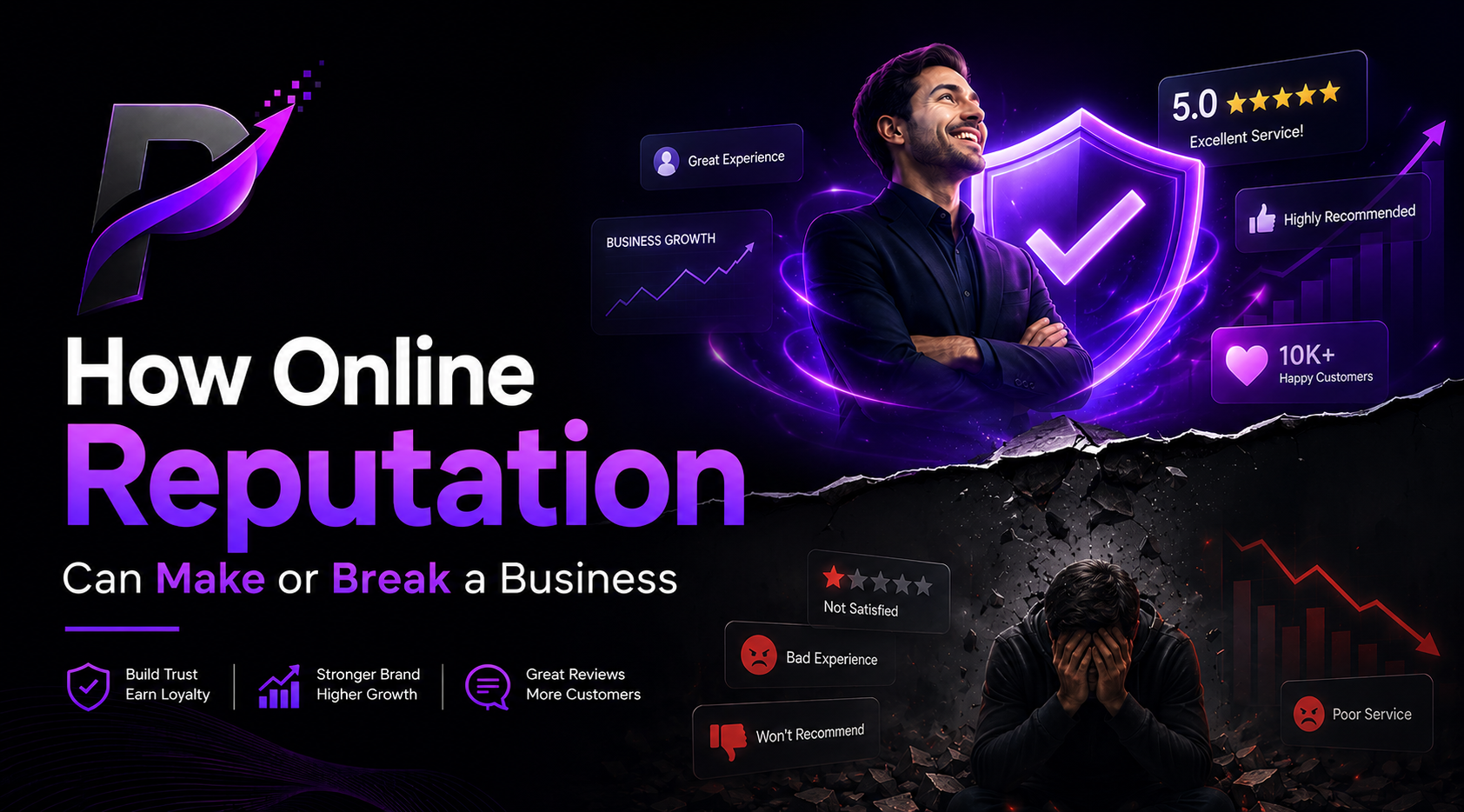
In the digital age, a business is no longer judged only by its products, services, or physical presence. Today, people search online before making decisions. They read reviews, check ratings, visit websites, browse social media pages, and compare businesses before choosing where to spend their money.
A business may provide excellent products or services, but if its online reputation is weak, customers may choose competitors instead. Online reputation has become one of the most important factors influencing trust, customer decisions, and long-term business growth.
Your online reputation is the overall perception people have about your business based on reviews, social media activity, search results, customer feedback, and online content.
In simple terms, your digital reputation becomes your first impression.
Why Online Reputation Matters
Modern customers rely heavily on information available online.
Before contacting a business, people often search for:
- Customer reviews
- Google ratings
- Social media activity
- Website quality
- Testimonials
- Brand mentions
People trust public opinions because they want reassurance before making purchasing decisions.
Even one negative experience can influence customer behavior.
First Impressions Start Online
In many cases, customers interact with a business online before visiting a store or speaking with anyone.
When users search for a business and find:
- Poor reviews
- Outdated websites
- Negative comments
- Low ratings
- Missing business information
Trust decreases immediately.
On the other hand, positive reviews and a professional online presence create confidence.
People often form opinions within seconds.
Customer Reviews Influence Buying Decisions
Online reviews act as digital word-of-mouth marketing.
Customers frequently read reviews before buying products or choosing services.
Positive reviews help businesses:
- Build trust
- Improve credibility
- Increase conversions
- Strengthen reputation
Negative reviews can create hesitation.
However, businesses should not fear criticism. Responding professionally to negative feedback often improves customer trust.
How a business handles problems can be as important as avoiding them.
Social Media Impacts Reputation
Social media platforms influence how people perceive businesses.
Customers observe:
- Content quality
- Customer interactions
- Response speed
- Brand personality
- Community engagement
Inactive or poorly managed social profiles can create doubts.
Consistent communication builds stronger relationships.
Search Results Shape Public Perception
When someone searches for a business name, search engine results create an immediate impression.
Search results may include:
- Website pages
- Reviews
- News articles
- Social profiles
- Customer discussions
Businesses should monitor search visibility regularly.
Negative content appearing on search pages can affect trust and customer acquisition.
Reputation Directly Affects Revenue
Businesses with strong reputations often experience:
- More customer inquiries
- Better conversion rates
- Increased repeat customers
- Stronger brand loyalty
Trust reduces hesitation.
Customers naturally prefer businesses that appear reliable.
Reputation is not simply about image. It directly influences sales.
How Businesses Can Build Strong Online Reputation
Building a positive reputation requires continuous effort.
Useful strategies include:
Encourage customer reviews
Ask satisfied customers to share honest feedback.
Respond professionally
Reply respectfully to positive and negative comments.
Maintain active social profiles
Engage consistently with audiences.
Create quality content
Publish useful blogs and educational content.
Monitor online mentions
Track what customers say about your business.
Reputation management is an ongoing process.
Common Reputation Mistakes Businesses Make
Many businesses unintentionally damage their reputation through avoidable mistakes:
- Ignoring reviews
- Slow responses
- Inconsistent branding
- Poor customer service
- Outdated websites
- Lack of transparency
Small issues can create larger problems over time.
Conclusion
Online reputation can significantly influence business success. Customers rely on reviews, search results, and social proof before making decisions. Businesses with strong reputations build trust, improve customer relationships, and create long-term growth opportunities.
Reputation takes time to build and only moments to damage. Humans will ignore years of excellent service and suddenly become detectives after reading one angry review written at 2:13 AM by someone furious about delayed delivery. Digital civilization continues to be emotionally adventurous.
Leave a Reply