
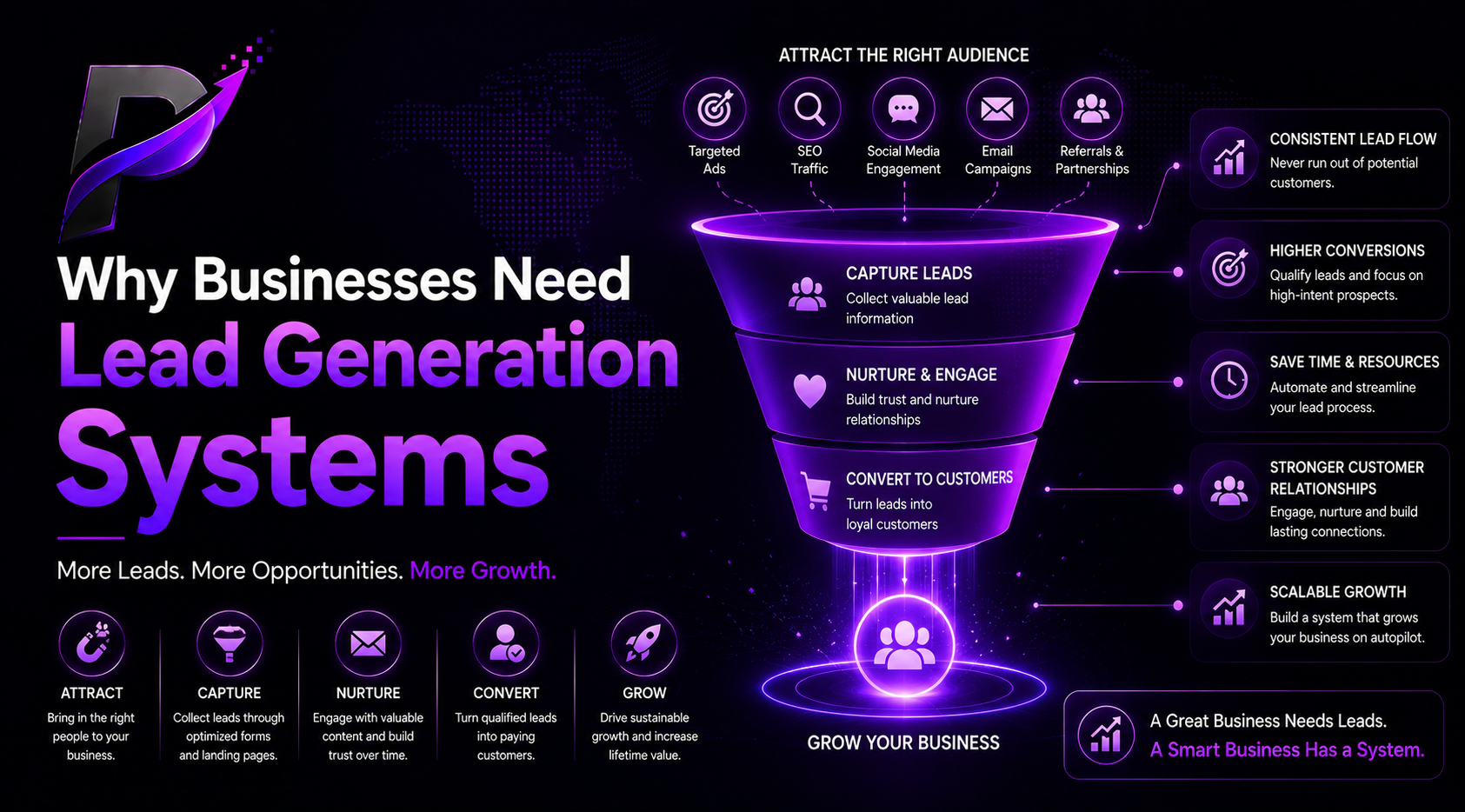
Every business wants more customers, more sales, and sustainable growth. However, many businesses rely on referrals, occasional inquiries, or random website visitors to generate revenue. While these methods can bring customers, they are often unpredictable and difficult to scale.
A lead generation system helps businesses consistently attract, capture, and nurture potential customers. Instead of waiting for people to contact them, businesses create a structured process that turns interested visitors into qualified leads and eventually paying customers.
In today’s competitive market, having a lead generation system is no longer optional. It is an essential part of business growth.
What Is a Lead Generation System?
A lead generation system is a process designed to attract potential customers and collect their contact information for future communication.
A lead generation system typically includes:
- Website landing pages
- Contact forms
- Social media campaigns
- Email marketing
- SEO strategies
- Paid advertising
- Lead magnets
- CRM tools
The goal is to convert anonymous visitors into identifiable prospects.
Once a business captures a lead, it can continue building a relationship until the person is ready to buy.
Why Businesses Cannot Depend on Random Inquiries
Many businesses operate without a clear lead generation strategy.
Common challenges include:
- Inconsistent customer inquiries
- Unpredictable sales
- Difficulty forecasting revenue
- Dependence on referrals
- Limited growth opportunities
Without a system, customer acquisition becomes uncertain.
A structured lead generation process creates more stability.
Lead Generation Creates a Predictable Sales Pipeline
One of the biggest advantages of lead generation is predictability.
When businesses consistently generate leads, they can:
- Forecast future sales
- Plan marketing budgets
- Track performance
- Improve conversion rates
Instead of relying on chance, businesses create a repeatable growth process.
Predictability makes scaling easier.
It Helps Identify Interested Customers
Not every website visitor is ready to buy immediately.
Some people are:
- Researching options
- Comparing competitors
- Learning about products
- Exploring solutions
Lead generation helps businesses identify these interested prospects.
Businesses can then nurture leads until they are ready to make decisions.
Lead Nurturing Increases Conversions
Many customers do not purchase during their first interaction.
Research often shows that people need multiple touchpoints before making buying decisions.
Lead nurturing may include:
- Email campaigns
- Educational content
- Follow-up messages
- Special offers
- Product updates
Regular communication keeps businesses visible.
Trust grows over time.
Lead Generation Improves Marketing Efficiency
Without lead tracking, businesses often waste marketing budgets.
Lead generation systems help businesses understand:
- Which channels generate leads
- Which campaigns perform best
- Which audiences convert
- Which content drives engagement
Data-driven decisions improve marketing results.
Businesses can invest resources more effectively.
Digital Marketing Supports Lead Generation
Several digital marketing channels contribute to lead generation.
Search Engine Optimization (SEO)
SEO helps businesses attract visitors through search engines.
People searching for solutions often become valuable leads.
Social Media Marketing
Social platforms help businesses connect with potential customers and increase brand awareness.
Paid Advertising
Targeted ads can generate leads quickly.
Businesses can reach specific audiences based on interests, behavior, and demographics.
Content Marketing
Blogs, guides, and educational content attract visitors and build trust.
Useful content often encourages users to share contact information.
Common Lead Generation Mistakes
Businesses often reduce results through avoidable mistakes:
- Poor landing page design
- Weak calls-to-action
- Slow website speed
- Complicated forms
- Lack of follow-up communication
- Ignoring lead data
Small improvements can significantly increase lead quality and conversion rates.
Characteristics of an Effective Lead Generation System
A strong lead generation system should:
- Attract relevant visitors
- Capture contact information
- Provide value
- Build trust
- Follow up consistently
- Track performance
The entire process should guide prospects toward becoming customers.
Conclusion
Lead generation systems help businesses create consistent growth by attracting, capturing, and nurturing potential customers. Instead of relying on random inquiries or referrals, businesses build predictable processes that improve conversions and support long-term success.
Businesses often spend enormous effort trying to find customers. A lead generation system flips the process and creates a situation where interested customers come to the business. A surprisingly efficient idea in a world that often prefers making simple things unnecessarily complicated.
Leave a Reply