
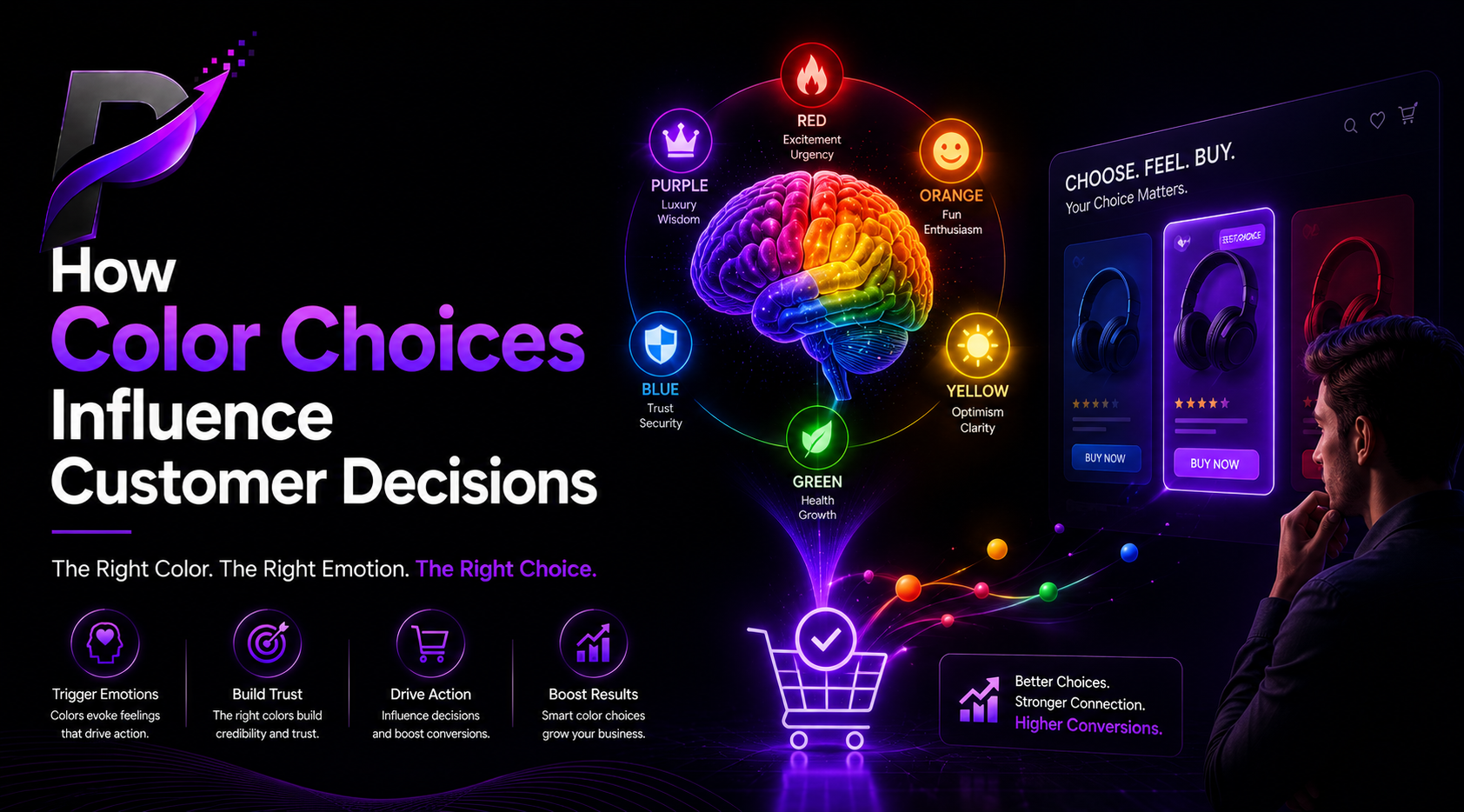
Colors are more powerful than many businesses realize. In digital marketing and website design, color is not simply about appearance. Colors influence emotions, perception, behavior, and decision-making. Businesses carefully select colors because visual experiences affect how customers feel and respond.
People process visual information very quickly, and color often creates an immediate emotional reaction before users even read content. The colors used in logos, websites, advertisements, buttons, and branding can influence customer trust, engagement, and purchasing decisions.
Understanding color psychology helps businesses create better user experiences and stronger marketing strategies.
Why Color Psychology Matters
Color psychology refers to how different colors influence human emotions and behavior.
Customers often make quick judgments based on visual impressions. Colors can communicate:
- Trust
- Excitement
- Luxury
- Urgency
- Confidence
- Calmness
Businesses use color strategically to create desired emotional responses.
A color choice may appear small, but it can influence customer actions.
First Impressions Are Influenced by Color
When visitors land on a website, visual appearance immediately affects perception.
Colors help shape opinions about:
- Brand professionalism
- Product quality
- Business personality
- Website trustworthiness
For example, financial businesses often use blue because it creates feelings of trust and stability.
Luxury brands frequently use black because it creates premium perception.
Visual communication begins instantly.
Common Color Meanings in Marketing
Different colors are associated with different emotions.
Blue
Blue often represents:
- Trust
- Security
- Professionalism
- Stability
Many technology companies and financial brands use blue.
Red
Red commonly communicates:
- Urgency
- Energy
- Excitement
- Attention
Red is often used in sales promotions and call-to-action sections.
Green
Green usually represents:
- Growth
- Nature
- Health
- Positivity
Health and eco-friendly brands frequently use green.
Yellow
Yellow often communicates:
- Optimism
- Warmth
- Happiness
However, excessive yellow can become overwhelming.
Black
Black often represents:
- Luxury
- Power
- Sophistication
Premium brands commonly use black designs.
Color Impacts Purchase Decisions
Customers do not always make decisions logically.
Visual presentation influences emotions.
Examples:
A brightly colored button may attract more attention.
A calming color palette may increase trust.
An aggressive design may create urgency.
Color can influence:
- Click rates
- Engagement
- User attention
- Brand recognition
- Conversions
Small design changes sometimes create measurable results.
Call-to-Action Button Colors Matter
Call-to-action buttons guide users toward actions.
Examples:
- Buy Now
- Contact Us
- Learn More
- Subscribe
Button visibility affects user behavior.
Businesses often test different colors to understand which versions generate better performance.
Contrast and visibility matter more than simply choosing popular colors.
Branding Consistency Builds Recognition
Consistent color usage helps customers recognize businesses.
Strong brands maintain similar color schemes across:
- Websites
- Social media
- Advertisements
- Packaging
- Logos
Consistency strengthens identity and trust.
Repeated exposure increases familiarity.
Color Preferences Can Vary
Color interpretation is not always universal.
Factors affecting perception include:
- Culture
- Industry
- Age
- Audience preferences
- Personal experiences
Businesses should understand their target audience before making decisions.
Testing is important.
Best Practices for Color Selection
Useful recommendations:
- Keep designs simple
- Maintain contrast
- Use limited color palettes
- Prioritize readability
- Focus on audience behavior
- Test performance regularly
Design should support usability.
Conclusion
Color choices influence customer decisions by affecting emotions, trust, attention, and perception. Businesses that understand color psychology can create stronger branding and better customer experiences.
People often believe purchasing decisions come from pure logic. Then a slightly brighter button appears, and suddenly behavior changes. Human brains continue conducting tiny emotional experiments while pretending spreadsheets made the decision.
Leave a Reply