
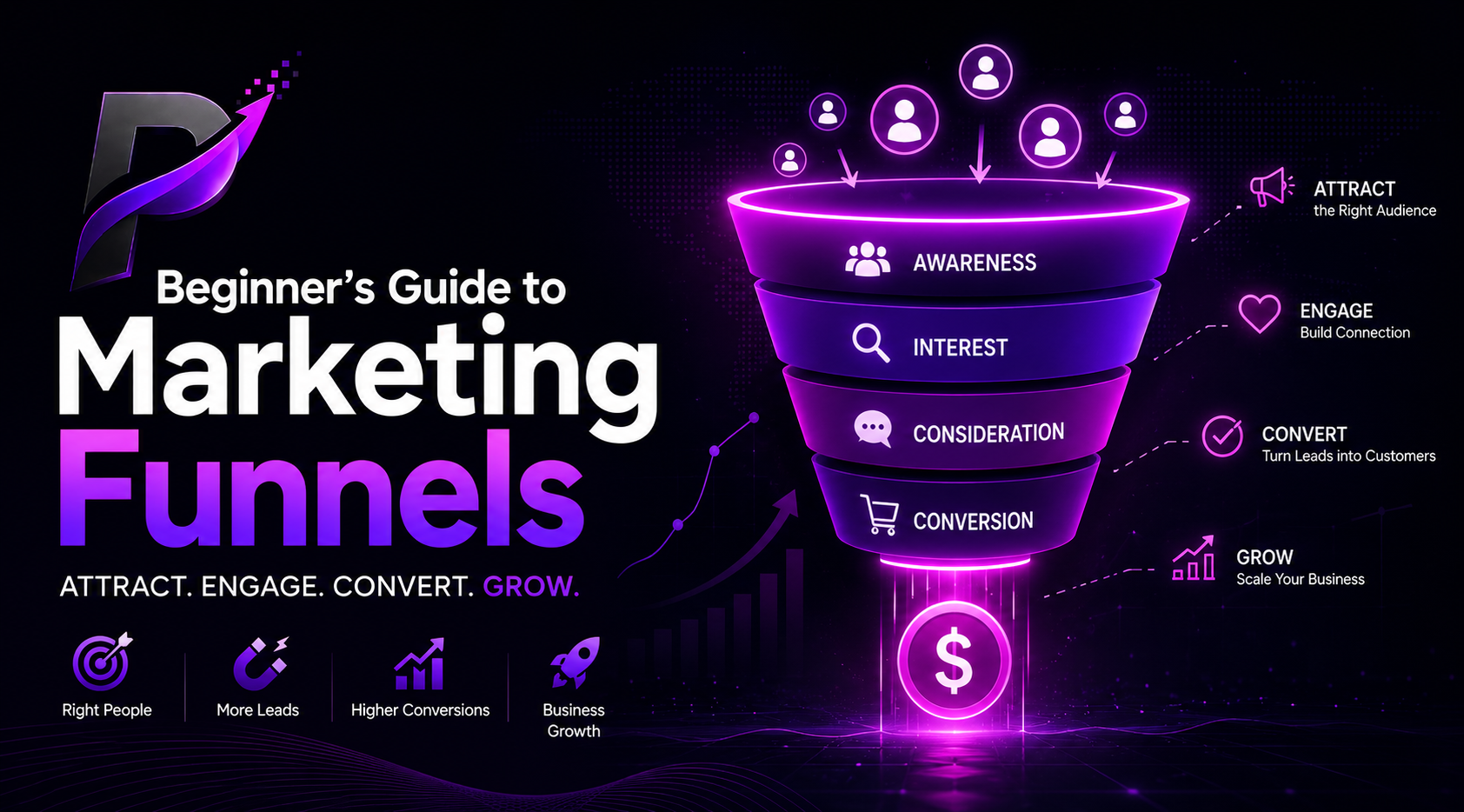
In digital marketing, attracting visitors to a website is only the first step. Many businesses focus heavily on getting traffic through SEO, social media, and advertisements but overlook an important question: what happens after visitors arrive?
Not every visitor becomes a customer immediately. People move through different stages before making a purchase decision. They discover a business, learn about it, compare options, build trust, and eventually decide whether to buy. This entire journey is known as a marketing funnel.
A marketing funnel is a process that guides potential customers from awareness to conversion. It helps businesses understand customer behavior and create strategies that move people closer to becoming customers.
Think of a funnel like a journey. Many people enter at the top, but only a smaller number reach the final stage and complete an action.
Why Marketing Funnels Matter
Without a funnel, businesses often attract visitors without a clear strategy.
Marketing funnels help businesses:
- Understand customer behavior
- Improve lead generation
- Increase conversion rates
- Build customer trust
- Track customer journeys
- Create more targeted campaigns
Businesses that understand how customers move through the funnel often make better marketing decisions.
Stages of a Marketing Funnel
Most marketing funnels contain several stages.
1. Awareness Stage
This is the top of the funnel.
At this stage, people discover your business for the first time.
Visitors may find you through:
- Google searches
- Social media posts
- Blog content
- Online advertisements
- Video marketing
- Referrals
The goal here is visibility and attention.
Businesses should focus on educational and informative content rather than aggressive selling.
Examples:
- Blog posts
- Social media content
- Videos
- SEO content
2. Interest Stage
Once people become aware of your business, they begin learning more.
Potential customers may:
- Visit your website
- Read blogs
- Follow social media pages
- Subscribe to newsletters
At this stage people want information.
Businesses should provide value and answer customer questions.
Helpful content includes:
- Guides
- Educational articles
- FAQs
- Case studies
Trust starts building here.
3. Consideration Stage
Customers now compare options.
They begin asking:
- Why should I choose this business?
- What makes this product different?
- Can I trust this company?
Businesses can support customers with:
- Testimonials
- Reviews
- Product comparisons
- Success stories
- Free resources
This stage reduces uncertainty.
4. Conversion Stage
This is where visitors become customers.
Possible conversion actions:
- Making purchases
- Booking services
- Filling inquiry forms
- Contacting businesses
- Signing up
At this stage, clear calls-to-action matter.
Examples:
- Buy Now
- Contact Us
- Book Consultation
- Request Quote
Simple and friction-free experiences improve conversions.
5. Retention Stage
Many businesses stop after the sale.
However, retaining customers often costs less than finding new ones.
Retention strategies include:
- Follow-up emails
- Loyalty programs
- Helpful content
- Personalized communication
- Customer support
Repeat customers often become long-term supporters.
Common Funnel Mistakes Businesses Make
Businesses frequently create funnel problems without realizing it.
Common mistakes:
- Focusing only on traffic
- Weak calls-to-action
- Ignoring customer trust
- Poor website experience
- Lack of follow-up communication
- Not measuring results
Without optimization, customers leave before reaching the final stage.
How Businesses Can Improve Their Funnels
Businesses can improve performance by:
- Understanding customer needs
- Creating useful content
- Building trust
- Simplifying websites
- Tracking user behavior
- Testing landing pages
Small improvements can create large results over time.
Conclusion
Marketing funnels help businesses understand how people move from discovering a brand to becoming loyal customers. Instead of treating every visitor the same, funnels create structured customer journeys that improve engagement and conversions.
Many businesses chase traffic while forgetting direction. Bringing thousands of visitors to a website without a funnel is like inviting crowds into a store and then hiding the checkout counter. Humans remain endlessly creative with avoidable problems.
Leave a Reply